Perhaps you have launched your boat from a trailer by backing
down a ramp designed for this purpose.
It
was on such a ramp that I drove down to water level and instead of sinking,
continued out onto ice of Kabetogama Lake.
Having never done this before, I was in four wheel drive and creeping
scared.
Other car tracks in the new snow lended encouragement,
and soon I felt almost safe.
A plow had piled up banks of snow along both
sides of the “road”
and I cruised along imagining
wakes from my boat.

Some places, a chilling wind at zero degrees whipped the
plowed banks into art forms, and in other places the wind removed all snow from
the ice, which looked rather like asphalt pavement.
I worried about cracks in the “pavement” and
wondered if they had anything to do with rumbling sounds I heard in the
distance.

Then I saw what looked like water along the “road” and got out
to assure myself that it was not water, but ice.
It splashed when I stepped in it.
And a layer of ice had clearly been broken
into pieces by passing tires.
It was all
disconcerting, but since other tires had gone further, I decided to
continue.


A group of small structures began appearing in the distance.
You can see four of them in the left photo. (Click on any photo to enlarge it.)
The right-most one appeared to
have steam or smoke rising from it.
The
others seemed vacant.
I parked the jeep
and walked toward it. There were fresh
car tracks leading to it and steam was indeed rising. I stood some ten feet away from the door and
called “Good morning.” It took me several
tries, but the door finally opened a crack, and a man inspected me. “Come in and close the door,” he said.


Within five minutes I believed I had met a friendly fisherman,
happy to answer my many questions about life in the far north and told me why
ice fishing is so great.
“I suppose you
don’t get many visitors,” I said.
“I
thought I was hearing things when you called.”

That flimsy-looking rod and line have dropped
a minnow about thirty feet down, near the
bottom of the lake, through an eight-inch hole in twenty-inch thick ice.
He bored the hole with that auger, and if he
wants to sleep, he has two bunks.
He has
six holes through the floor of his ice house if he keeps them all free of ice,
for six lines if he chooses.
Today he
has just two lines down under the ice.
That fish finder is from his summer boat; it
detects movements of fish.

He explained the cracks and the slushy water on the ice and the
rumbles I heard in the distance.
They
are all caused by expansion and contraction of the ice and changes in pressure
on its surface.
These forces crack the
ice and pump water up through the cracks.
They are nothing to worry about.


I drove several more miles on the lake, happy for having met a
kind man in an ice house, a warm time in a chilly wind.
Having experienced many such encounters with
tenuous beginnings, I wonder if, all together, they legitimize the one
that could go wrong.
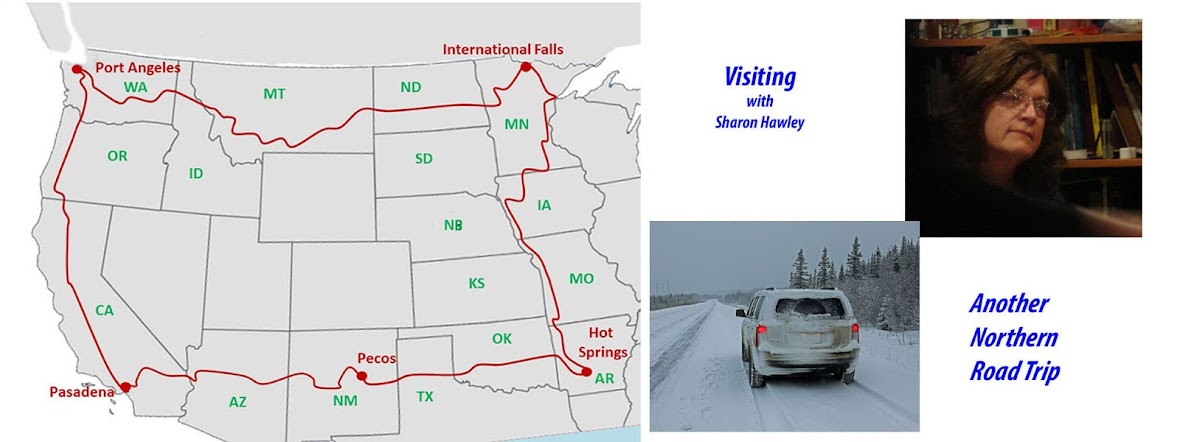
Michael Angerman of Corvallis, Oregon, has prepared an interactive
map of my trip showing mv daily locations.
Please see Michael’s Map:
Michael's Map